
Delivery: access, lead times and European rules
Updated 16 Sept 20263 min read
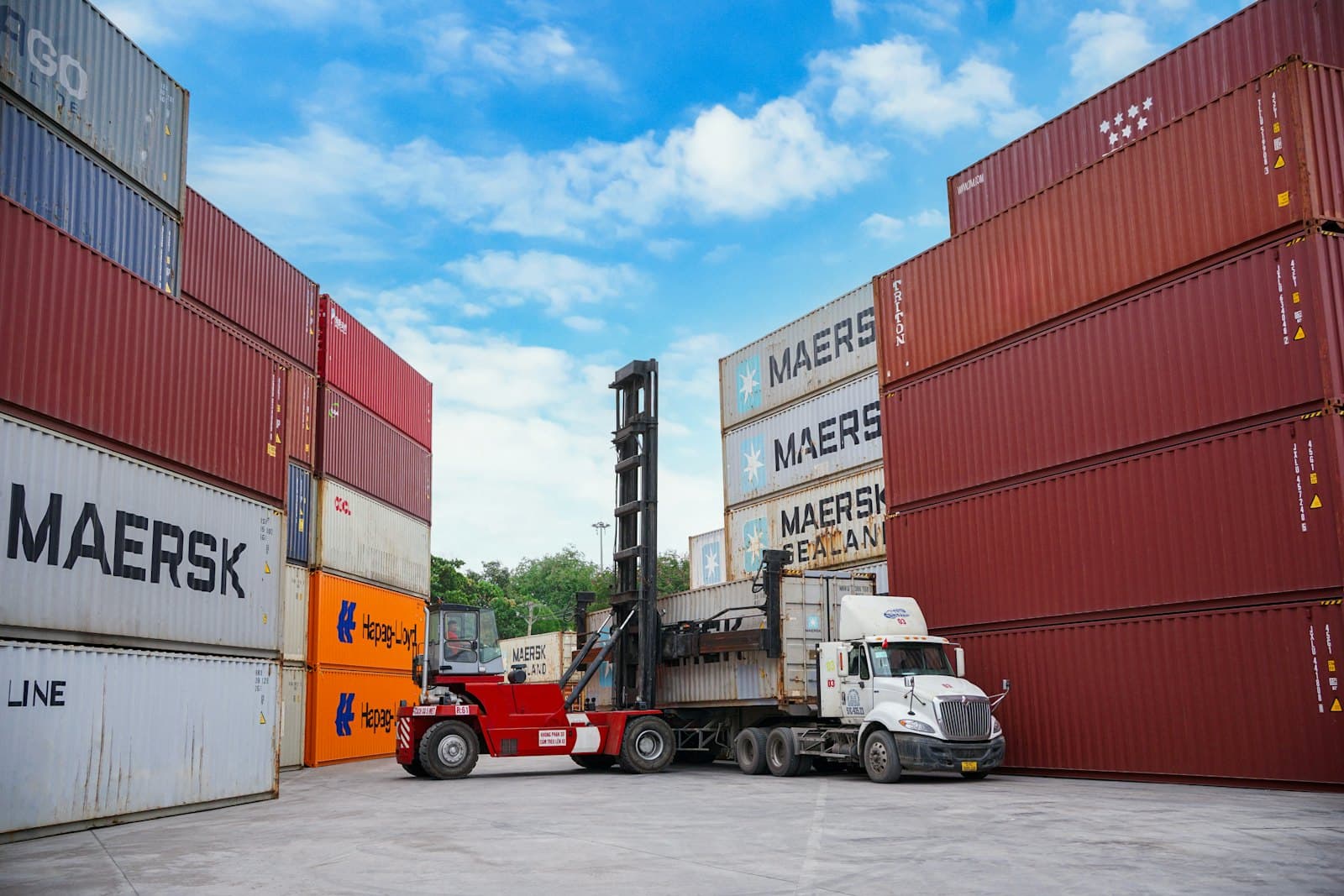
A container is not a parcel. It weighs between 1.3 and 4 tonnes empty, runs up to twelve metres, and the lorry bringing it has to get in, manoeuvre and get out again. This page sets out what to prepare, and what European rules require of the haulier.
Three ways to set a container down
- Tilt bed. The bed tips and the container slides off. Fastest and cheapest, but it needs clear space straight behind: the length of the container, plus the lorry, plus three metres.
- Crane lorry. A loader crane places the box beside the lorry — the answer when a hedge, a low wall or exact footings are in the way. It needs overhead clearance and reach matched to the weight.
- Skeletal trailer and forklift. For 40 ft units and multiple deliveries, on a site that already has lifting plant.
What your site must allow
| Constraint | 20 ft | 40 ft |
|---|---|---|
| Access width | 3.50 m | 4.50 m |
| Straight run for manoeuvring | 20 m | 30 m |
| Overhead clearance | 4.30 m along the whole route | |
| Maximum gradient | 10 % | |
| Ground | compacted and level to within 5 cm | |
Set the box on four concrete pads, one under each corner casting. A container left on bare soil twists over time, and its doors stop closing.
The European regulatory frame
- Road envelope. Directive 96/53/EC caps a road train at 4 m high and 2.55 m wide. A 2.90 m High Cube on a trailer often exceeds that, which moves the job into abnormal-load territory, with a permit from every state crossed.
- Weight. The maximum authorised train weight is 40 tonnes, raised to 44 in combined transport in several member states. A loaded container may need lightening before the road leg.
- Driving hours. Regulation (EC) No 561/2006 governs driving and rest periods. Beyond roughly 700 km, delivery spreads over two days — a legal constraint, not a commercial one.
- Dangerous goods. A container meant to store classified products falls under the ADR agreement, standing still included. Tell us before ordering: signage and fit-out differ.
- Modular buildings. Set down for the long term, a habitable module falls under the Construction Products Regulation (EU) No 305/2011 and carries CE marking. Depending on floor area and duration, the local authority requires prior notice or planning permission.
- Public highway. If the unload happens from a public road, a temporary occupation permit must be requested from the council, usually a fortnight ahead.
Lead times by destination
| Destination | Indicative lead time |
|---|---|
| Mainland France | 7 working days |
| Belgium | 8 working days |
| Netherlands | 8 working days |
| Luxembourg | 8 working days |
| Germany | 10 working days |
| Spain | 12 working days |
| Italy | 12 working days |
| Portugal | 14 working days |
| Switzerland | 12 working days |
| Austria | 12 working days |
| Poland | 14 working days |
| United Kingdom | 15 working days |
Counted from order confirmation, excluding abnormal-load permits and port closures.
On the day
- Someone must be on site to point out the exact position.
- Clear the route: vehicles, skips, low branches.
- Check the box before the driver leaves — doors, seals, floor, container number — and note any reservation on the delivery docket.